Yes No Share to Facebook
Failing to Report a Snowmobile Accident Contrary to Section 13 of the Motorized Snow Vehicles Act
Question: Must the police be notified after a snowmobile accident in Ontario if there’s an injury or more than $400 in total damage?
Answer: Yes, in Ontario the person in charge of a snowmobile involved in an accident must report it to the nearest police officer if there are personal injuries or the total property damage appears to exceed $400, as required by Motorized Snow Vehicles Act, R.S.O. 1990, c. M.44. Lippa Legal Services provides Ontario paralegal services to help you understand the “forthwith” reporting duty, document what happened, and respond to any charge or fine risk for failing to report.
Must the Police Be Notified of a Snowmobile Accident?
Where An Injury Has Occurred or Damage Appears Greater Than $400 In Total, Police Must Be Notified of a Snowmobile Accident.
Understanding the Mandate to Report a Snowmobile Accident Including Applicable Penalty For Failure to Do So
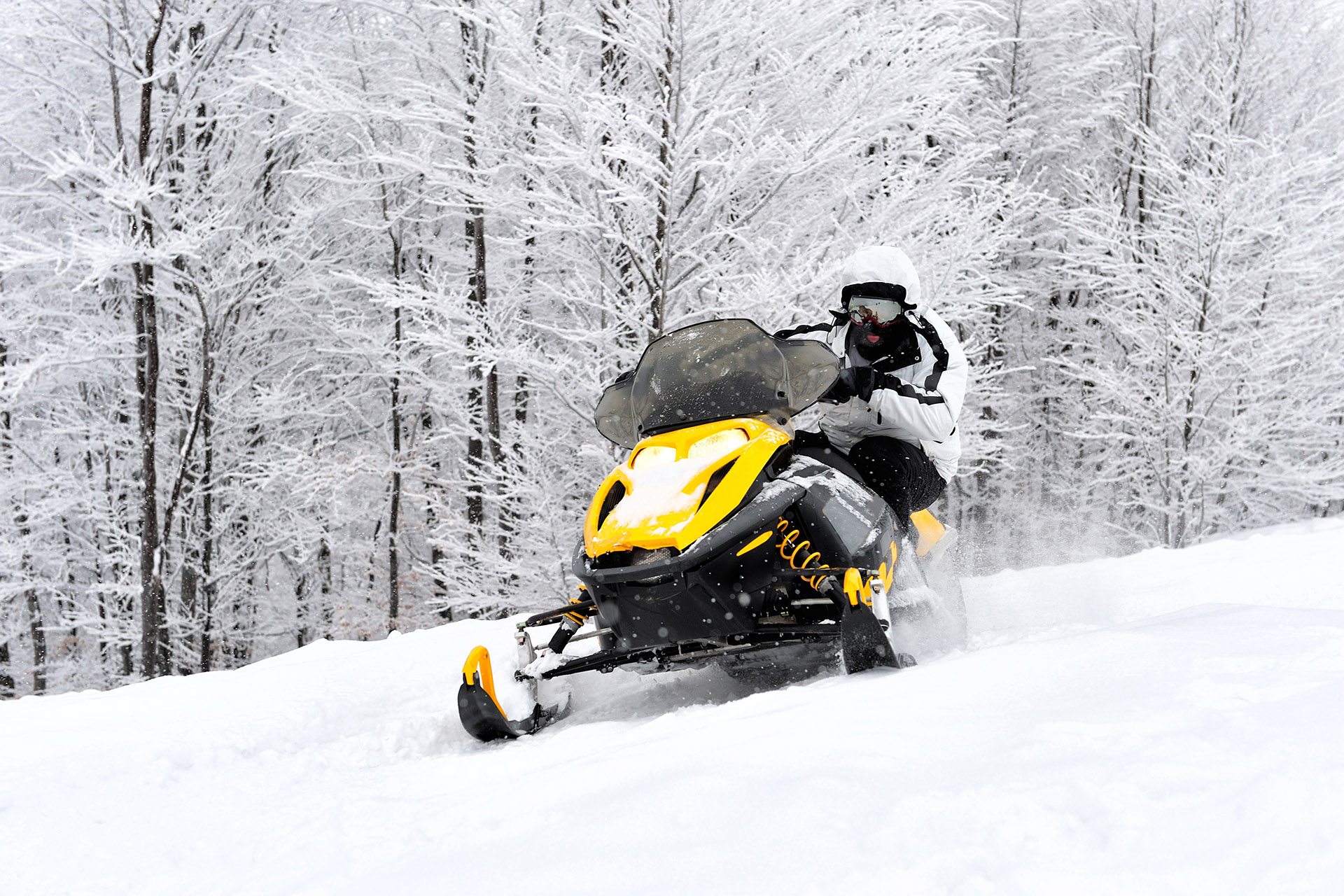 Similar to the law that applies to automobiles, the law that applies to snowmobiles requires that an accident involving an injury, or damage appearing beyond the prescribed value, is reported to the police. If an operator of a snowmobile fails to report a reportable accident, a charge may be brought against the operator.
The Law
When Must a Snowmobile Accident Be Reported to Police?
The legal mandate to report an accident involving a snowmobile is prescribed separately from the legal mandate to report an automobile accident per the Highway Traffic Act, R.S.O. 1990, c. H.8 and is instead found within section 13 of the Motorized Snow Vehicles Act, R.S.O. 1990, c. M.44. The requirement to report a snowmobile accident arises wherever there is an injury or collective damage to the snowmobile, and other property, appears greater than four hundred ($400.00) dollars. Specifically, the reporting requirement within the Motorized Snow Vehicles Act states:
Duty to report accident
13 (1) Every person in charge of a motorized snow vehicle who is directly or indirectly involved in an accident shall, if the accident results in personal injuries or in damage to property apparently exceeding $400, report the accident forthwith to the nearest police officer and furnish the police officer with information in respect of,
(a) the names and addresses of the persons involved;
(b) the date and location of the occurrence; and
(c) the circumstances under which the accident occurred.
Interestingly, whereas the Motorized Snow Vehicles Act requires that an accident be reported "forthwith", the Motorized Snow Vehicles Act is silent, meaning lacking details, regarding the definition of "forthwith". Accordingly, reference should be made to the precedent court decision of the Court of Appeal as per the matter of R. v. Cameron, 2006 CanLII 6569 wherein it was said:
[6] Subsection 13(1)(c) of the Motorized Snow Vehicles Act provides that “[e]very person in charge of a motorized snow vehicle who is directly or indirectly involved in an accident shall, if the accident results in personal injuries or in damage to property apparently exceeding $400, report the accident forthwith to the nearest police officer and furnish the police officer with information in respect of … (c) the circumstances under which the accident occurred.” There are no reported decisions that interpret the meaning of “forthwith” in the context of this section of the Motorized Snow Vehicles Act. However, this section is virtually identical to the failure to report provision in s. 199(1) of the Highway Traffic Act, R.S.O. 1990, c. H.8. Subsection 199(1) of the Highway Traffic Act has been interpreted to mean that someone involved in an accident must report it within a reasonable time having regard to all of the circumstances of the case. Both counsel appear to be in agreement that the interpretation to be given to the word “forthwith” should be the same in both statutes. The disagreement relates to how the forthwith requirement was applied.
Accordingly, per the Cameron decision, a snowmobile accident must be reported "forthwith" which is interpreted in the same manner as "forthwith" is interpreted for section 199(1) of the Highway Traffic Act, which is, "within a reasonable time having regard to all of the circumstances of the case".
Penalty
What Is the Punishment For Failing to Report a Snowmobile Accident to Police?
Whereas section 13 of the Motorized Snow Vehicles Act is silent, meaning lacking details, regarding the potential fine, reference to section 25 of the Motorized Snow Vehicles Act, being the section providing for a general penalty where a penalty is otherwise absent, is required. Specifically, section 25 of the Motorized Snow Vehicles Act states:
25 Every person who contravenes any of the provisions of this Act or the regulations is guilty of an offence and on conviction where a fine for the contravention is not otherwise provided for herein is liable to a fine not exceeding $1,000.
Accordingly, the fine for failing to report an accident as legally required is a maximum of one thousand ($1,000) dollars. Interestingly, and unlike most fines for an offence, the provision fails to prescribe a minimum fine.
Summary Comment
When an accident involving a snowmobile occurs, the owner or driver or any other "person in charge" of the snowmobile must report the accident to police if an injury is involved or if the damage appears to exceed four hundred ($400.00) dollars. Where a person required to report an accident fails to do so "forthwith", meaning within a reasonable time considering the circumstances involved, the person may be subjected to a fine of up to one thousand ($1,000) dollars.
NOTE: A significant quantity of online searches like “lawyers near me” or “best lawyer in” typically indicates a desire for prompt and skilled legal assistance rather than pointing to a particular title. In Ontario, “licensed paralegals” fall under the same regulatory body as lawyers, the Law Society, and have the authority to represent clients in specific litigation cases. Advocacy, legal evaluation, and procedural expertise are fundamental aspects of this role. Lippa Legal Services offers legal representation within its licensed framework, focusing on strategic placement, evidence preparation, and compelling advocacy aimed at securing effective and advantageous outcomes for clients.